
Hammer Returns to Big Screen in Modern Western
- Dec 1, 2025
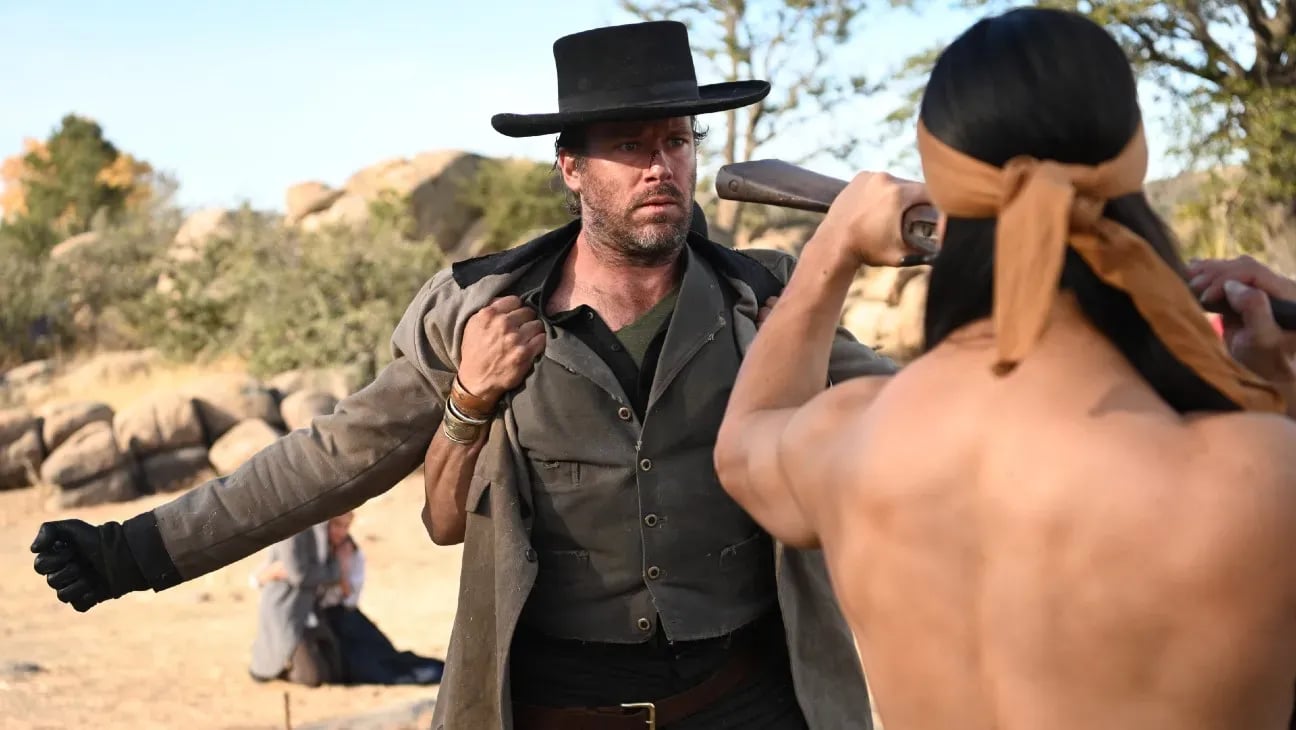
Armie Hammer is making his cinematic return in a new indie Western, a jarring first appearance since news broke regarding his turbulent private life. The film's character choice for Hammer stands as a contentious point for viewers, as his character is portrayed as an outlaw attempting to rape and mutilating a young woman.
Frontier Crucible, upon which all eyes are now fixed, emerges as a well-crafted if forgettable Western. Save for the brutal violence displayed, you could easily imagine this movie being released within the 1950s era. Sean Rowe's soundtrack accompanies scenes shot in Monument Valley, adequately evoking memories of John Ford's work and characters that could have belonged in an Anthony Mann movie.
Travis Mills directs the film based on the 1961 novel Desert Stake-Out by Harry Whittington, who passed away in 1989, and therefore, had no input in the screenplay. The storyline unfolds mainly in 1870s Arizona and spotlights quiet champion Merrick Beckford, portrayed by Myles Clohessy who channels Clint Eastwood. Beckford ventures on a dangerous journey through Apache territory, delivering much-needed medical supplies under the instruction of a military officer portrayed by William H. Macy. Along his journey, Beckford encounters a group of evident bad men led by Mule (a grizzled Thomas Jane), his twitchy son Billy (Ryan Masson), and the intimidating Edmund (Hammer).
Strife and tension soon arise among the formidable outlaws eyeing Beckford's horses, a couple trying to reach a military fort, and Beckford who remains committed to his mission. When a friendly Apache stumbles upon the group, the tensions take a grim turn. A quick-tempered Billy shoots the stranger, even though he maintains a good relationship with Beckford and the Apache tribe, propelling the possibility of revenge attacks.
The narrative mainly depends on this mounting tension while also straying into the occasional gory conflict, reaching a bloody climax when the tribe seeks retaliation on the group. With starkly convincing practical effects used for brutally detailed torture scenes, even the sturdiest viewers might need to look away. This violent showdown among the survivors marks the brutal close of the film.
Despite the graphic plot, Frontier Crucible seems to struggle with its sluggish narrative pace and fails to maintain engagement, mirroring director S. Craig Zahler’s cult 2015 Western Bone Tomahawk. Clohessy, while visually fitting into the hero mould, lacks the required charm to carry the film. The supporting cast outshines him, with Jane's adept portrayal of a villain and Hammer's commanding on-screen presence.
Frontier Crucible, while a mostly satisfactory attempt that will function satisfactorily on cable and VOD, is unlikely to restore momentum for the Western genre in mainstream theatres. It does, however, mark a noteworthy return of Armie Hammer to the big screen.